



SpinalCom BMS software: An open architecture for seamless digitalization
The advantages of our monitoring & control app:
• Native interoperability with all technical systems on the market
• Connection to time-series and transactional databases
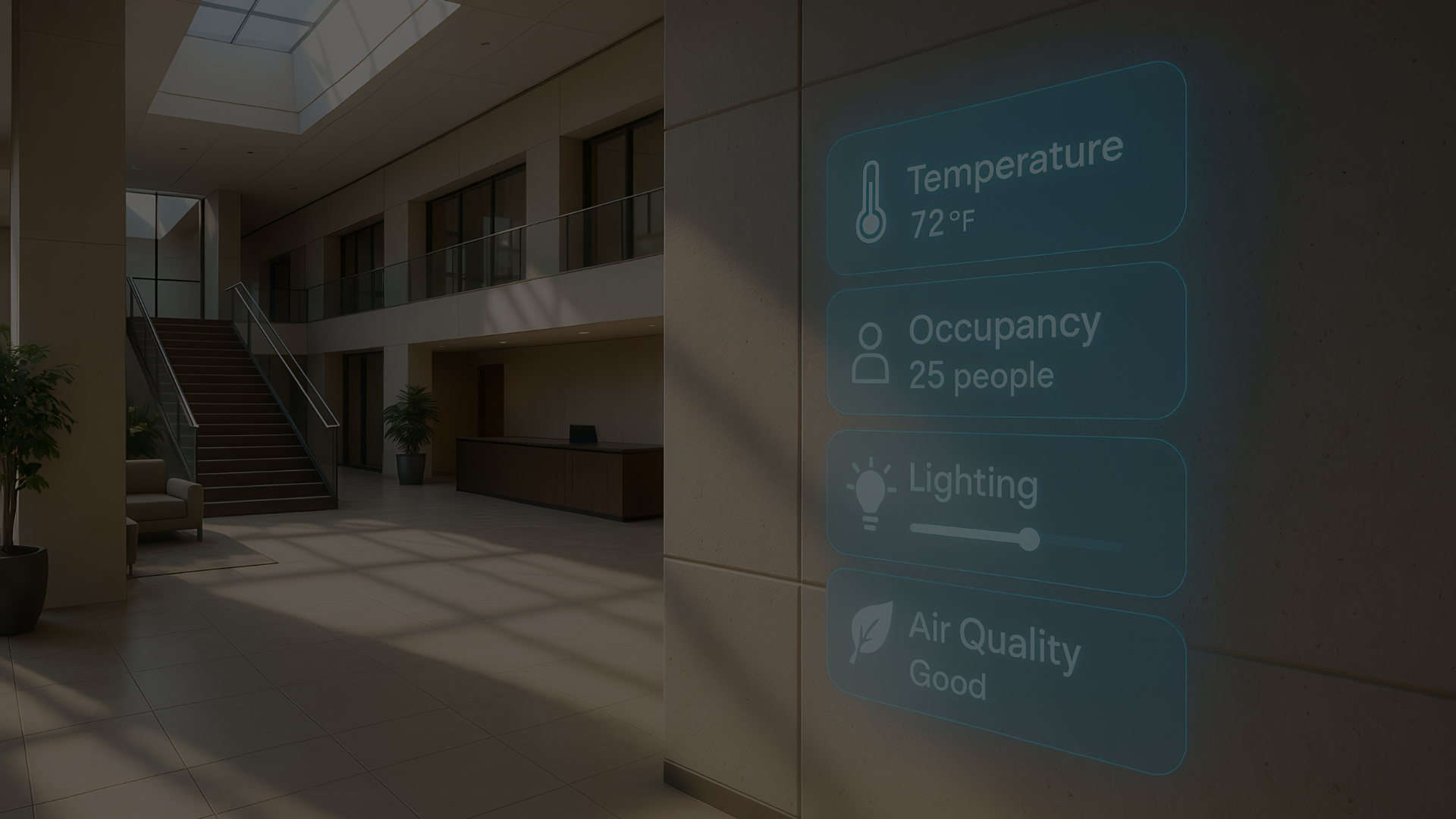
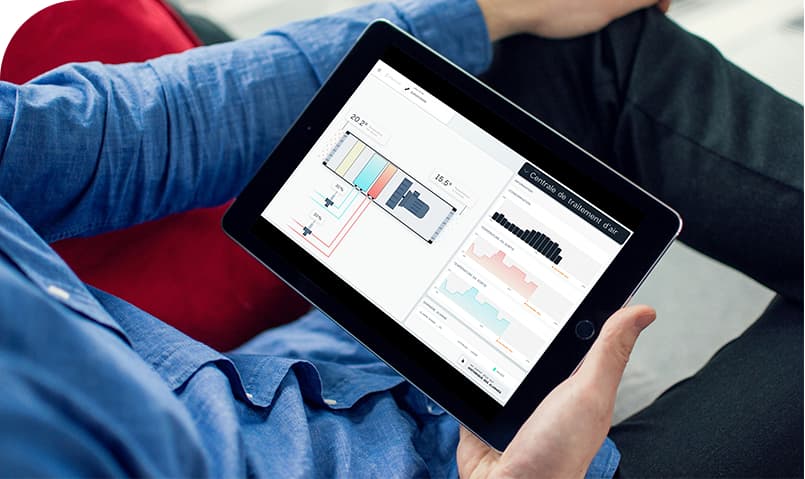
• Real-time visualization of equipment and indicators by functional zone
• A single repository for all our applications and dashboards (Monitoring & control, CMMS, EMS, occupancy…)
• A more efficient business model: fewer licenses, less build, more scalability
BMS Solutions Comparison
Traditional BMS vs SpinalWall BMS + BOS SpinalCore
| Criteria | Traditional BMS | SpinalWall BMS |
|---|---|---|
| Data management scope | Data limited to technical equipment, measurement points, alarms and time series | Wide scope (technical, BIM, IoT, digital twin…) |
| Standard Features | Present but with poor ergonomics | Complete and ergonomic |
| Native BIM and Digital Twin Integration | Non intégré nativement | Native BIM and Digital Twin Integration |
| Multi-protocol interoperability | Limited to field protocols (BACnet, Modbus, OPC, KNX…) | Multi-protocol and open APIs, compatible with BMS, IT, BIM… |
| Ergonomics and standardization | Different interfaces depending on the site | Single, standardized interface |
| Data quality and contextualization | Raw, non-contextualized data | Normalized and contextualized data |
| Data management capabilities | Limited data management capabilities | Advanced data management expertise |
| Analytics & predictiv AI | Limited and manual analyses, raw non-contextualized data | Enhanced AI and predictive capabilities, contextualized data for third-party AI |
| Scalability & modularity | Complex and costly scalability | Scalable, modular and fast, with documented SDKs and APIs |
| Maintenance & updates | Heavy updates dependent on the vendor | Centralized and seamless maintenance |
| Security | Variable security depending on the BMS | Secure architecture based on the Purdue model (OT-IT convergence) |
| IoT / Cloud / API openness | Low openness, closed systems, paid and limited openness | Full native IoT, Cloud, API openness |
| Deployment time | Manual and slow integration | Fast and automated deployment |
What are the main advantages of our BMS software?




Ready to transform your buildings? Request a personalized demonstration of SpinalWall Monitoring & Control
Request your demoThey trust us









Why upgrade your BMS system?
Upgrading your Building Management System (BMS) improves energy performance and equipment reliability. Updates fix bugs, strengthen cybersecurity, and often add new features tailored to current needs.
An up-to-date system facilitates interoperability with other modern solutions, simplifying overall building management. It also ensures better compliance with current standards and prepares your installation for future developments.
In short, regular updates optimize the lifespan of your system, reduce the risk of incidents, and improve your ability to manage the building effectively.
What is a BMS system?
A Building Management System (BMS) is a software platform that centralizes the control and monitoring of a building’s technical equipment.
It controls installations such as heating, ventilation, air conditioning, lighting, fire safety and access management. Through real-time data collection and analysis, it optimizes their operation to improve occupant comfort and limit energy consumption.
The system also facilitates maintenance by quickly detecting anomalies and scheduling preventive interventions. The BMS provides a global view and centralized management that simplifies building technical management, especially in large infrastructures.
The benefits of BMS integration
- Centralization of data from different equipment, for simplified and consistent management
- Energy optimization through precise and automated management of heating, air conditioning and lighting systems
- Reduction of operating costs through predictive maintenance and rapid fault alerts
- Improved occupant comfort through precise control of environmental conditions, adjusted according to usage
- Increased responsiveness to anomalies, facilitating decision-making and rapid problem resolution
- Interoperability with other technical systems such as security, video surveillance, or access management
- Detailed monitoring and reporting to analyze performance, ensure compliance with standards, and plan future improvements
- Facilitation of remote management, enabling monitoring & control of multiple sites from a single control station