



Why has digital signage become a key tool for the employee experience?
Because workspaces are increasingly shared, flexible and dynamic.
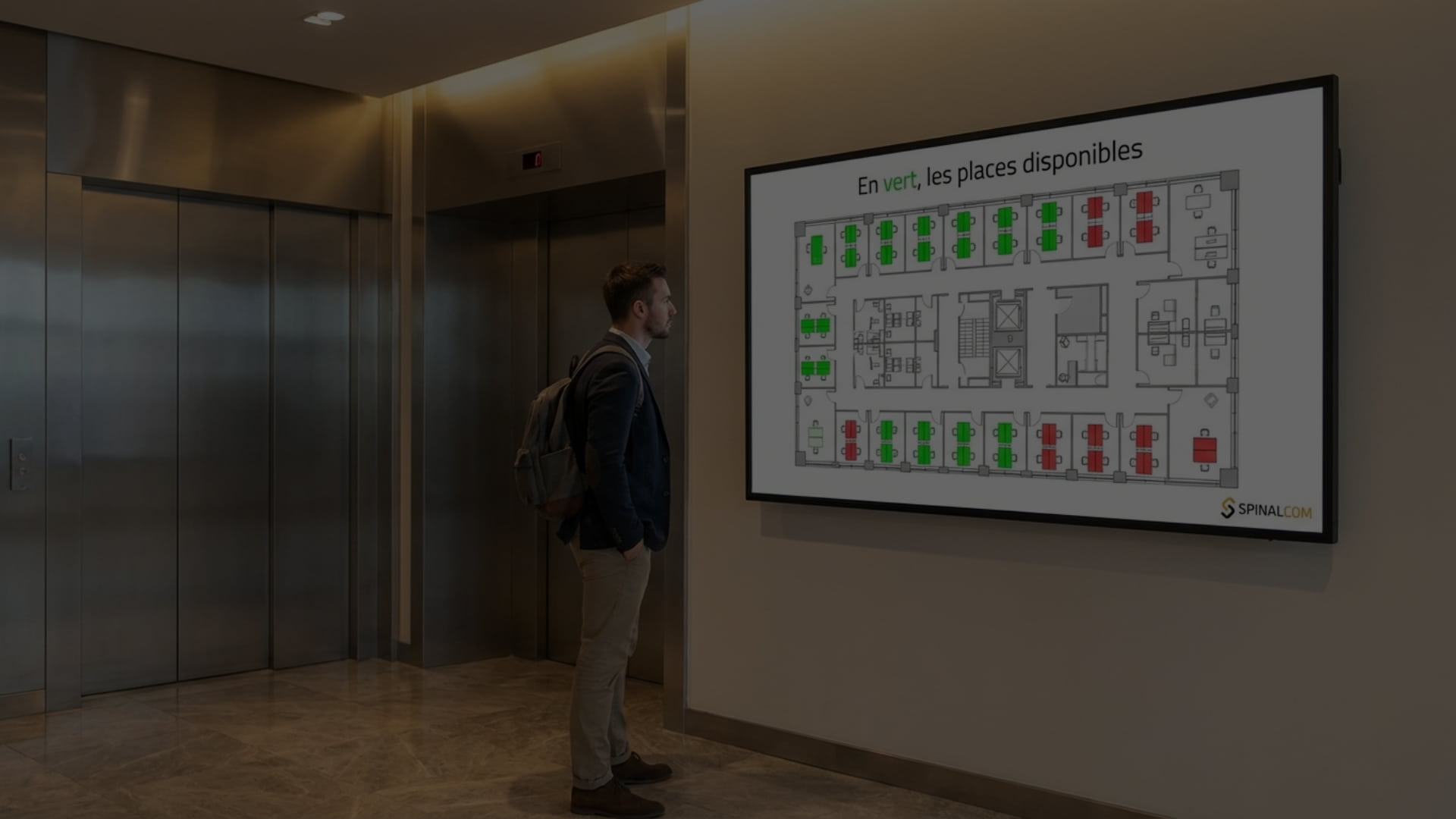
Digital signage can no longer be limited to passive display: it must become a local service, connected to the building’s actual usage.
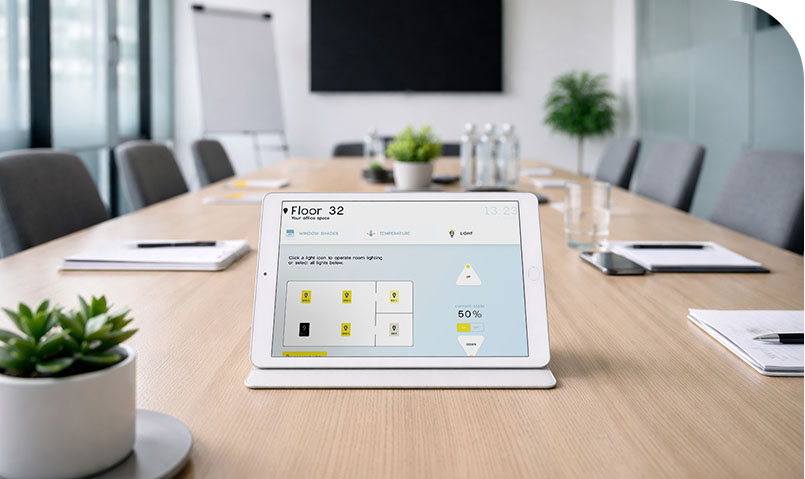
With SpinalDigital Signage, screens become active interfaces, useful to employees on a daily basis and usable by HR and the Workplace Environment Department to manage, optimize and enhance work environments.
Key Features
What are the benefits for employees, HR, and the workplace environment department?
Discover how SpinalDigital Signage turns your screens into genuine business services.
Request a demoThey trust us










What is digital signage in the context of buildings?
Digital signage refers to the use of screens and digital media to broadcast information, internal communications or interactive content within a building.
In a real-estate or operational context, it improves internal communication, enhances spaces with dynamic content (announcements, alerts, environmental data) and optimizes the user experience by guiding visitors or broadcasting practical information
Digital signage can also be integrated into the overall building management, with possible interactions with comfort, security or energy-performance systems.
What are the key steps to set up a digital signage project?
Defining requirements: identify the objectives (internal communication, signage, display of indicators, promotions or customer information).
Infrastructure audit: analyze connectivity, power supply and available space.
Content selection: determine the types of content to broadcast (text, images, videos, live feeds, real-time data).
Selecting media and software: choose the screens and management solutions suited to the usage and size of the building.
Installation and configuration: install the equipment and ensure integration with the other systems.
Training and management: train the teams and set up maintenance routines.
What regulatory considerations and best practices should you be aware of?
Comply with electrical and fire-safety standards for screen installation.
Ensure GDPR compliance for any display of personal data.
Check local obligations regarding signage and public display in buildings open to the public.
Provide for an appropriate sound and light level so as not to disturb occupants.
Install the screens to ensure accessibility and readability, particularly for people with reduced mobility.
How do I choose the digital signage solution suited to my building?
Assess the volume and nature of the content to be broadcast.
Check compatibility with existing systems (BMS, IoT, BIM, CMMS).
Favor solutions offering centralized and automatic content updates.
Choose a supplier offering reliable technical support and scalable maintenance.
Consider the scalability of screens and software to integrate future uses or technologies.
What costs are associated with installing and maintaining digital signage?
Screens and media: costs vary according to size, technology (LED, LCD, touchscreen) and durability.
Management software: licenses, subscriptions and advanced features.
Installation: electrical integration, mounts, cabling and network configuration.
Maintenance and updates: service contracts, technical interventions and regular updates.
Is digital signage compatible with older buildings?
Yes, digital signage can be integrated into older buildings with technical adaptations.
Installation of discreet, secure cabling for powering the screens.
Use of wireless or IP-network-connected solutions to limit heavy construction work.
Choice of screens and mounts suited to the space and existing architecture.
Possibility of integration into an overall smart building management strategy, even without a modern BMS.