



An open architecture
for a seamless digital twin


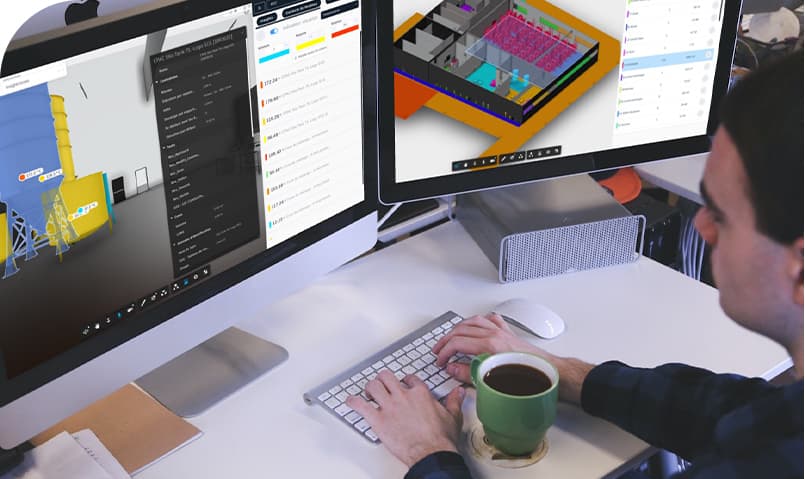
What a digital twin is (and is not)
| What it is not | What it is |
|---|---|
| BIM / CAD Model | BIM + real-time (OT) + transactional (IT) data |
| 3D Viewer | Contextualized data |
| Multiple interconnected databases | Unified database |
| BMS/SCADA/Enhanced control and command center | Smart and contextualized control |
| Graphical control and command center | Evolving dynamic replica |
Digital twin:
concrete benefits for every stakeholder


The 3 maturity levels of a digital twin
| Name / Type | Content | Limits | Concrete examples | |
|---|---|---|---|---|
| 1 | Static model (BIM/CAD) | Digital model (geometry + technical attributes) | No dynamic data, no link to real systems | 3D visualization, BIM document management |
| 2 | Visual Twin | Display of a model + some sensor data or documents | Visualization only, without logic or data model | 3D viewer with measurement points |
| 3 | A true Digital Twin | Unified model: BIM + real-time (OT) + transactional (IT), synchronized, contextualized, interoperable | None: foundation for AI, real-time control, automatic decisions | SpinalCore + SpinalWall |
Key figures on the digital twin
20 to 30 %
Average reduction in operational costs for companies adopting digital twins
Up to 40 %
Time savings on maintenance and operations
Up to 35 %
Energy savings through smart control
75 %
of companies that have implemented a digital twin observe an improvement in their decision-making processes
Take action: create your digital twin today Ready to transform your buildings, factories or infrastructures into smart assets controllable in real time? Discover how our BOS SpinalCore can become the reference digital twin of your portfolio.
Request a demoThey trust us









What are the different types of digital twin?
Digital twins come in several types depending on their use and complexity. The simplest is the static model, which represents the current state of a building or system, without real-time data.
Then there are dynamic models, which integrate real-time data to track changes and adjust parameters.
Finally, predictive twins use advanced algorithms to simulate future scenarios and anticipate potential needs or problems.
Each type serves different objectives, depending on the level of detail and control desired.
What are the features of digital twins?
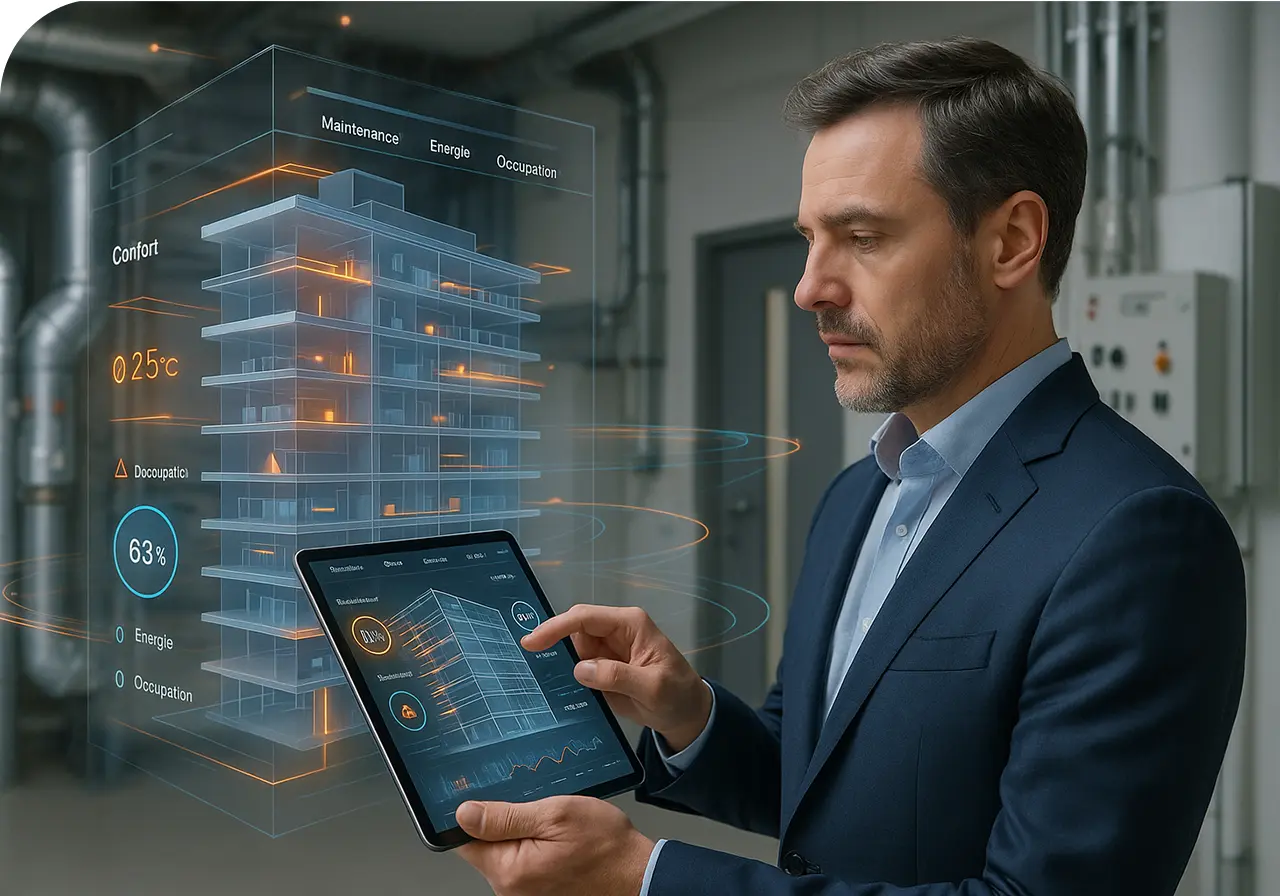
Digital twins enable 3D visualization of the building structure and real-time monitoring of sensor data (temperature, energy consumption, air quality, etc.).
They offer analysis tools to detect anomalies and assess the impact of changes or interventions.
These models also facilitate predictive maintenance, alerting before breakdowns occur.
Furthermore, they are used to optimize energy management, plan works and simulate different configurations before applying them in reality.
What is the future of the building digital twin?
The digital twin will continue to evolve with the integration of artificial intelligence and the Internet of Things, to offer even more refined and automated analyses.
It will become a central tool in the sustainable management of buildings, helping to reduce carbon footprint and improve occupant comfort.
Its use should become widespread, particularly in connected buildings and smart cities, to manage all infrastructures in real time.
The digital twin could also integrate further with other management systems to offer a global and complete view of operations.