



What is an EMS ?
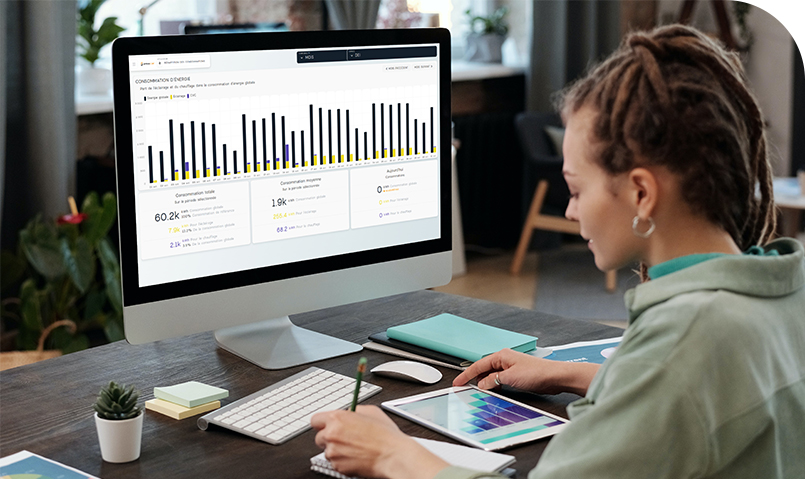
An EMS (Energy Management System) is energy management software designed to collect, analyze and visualize the energy consumption data of a building or a real-estate portfolio. Its main objective: identify energy-intensive areas, detect deviations and support the implementation of energy-efficiency measures.
Traditionally, these tools are deployed to:
- meet regulatory or CSR reporting requirements (BACS decree, tertiary decree, ISO 50001…);
- track energy performance as part of a cost-reduction approach;
- compare consumption across buildings or tenants;
- raise awareness among operators or occupants about energy usage.
But most EMS solutions on the market are limited to a reporting function. They do not interact with the building’s systems and do not leverage usage data in real time.
This is why we have designed a modular, interoperable and resolutely action-oriented solution: our SpinalWall Energy business pack.
Introducing our EMS: an open architecture for seamless digitalization
SpinalCom’s “Energy Management” business pack is much more than a conventional EMS. Deployed on our unified SpinalCore foundation, it integrates natively with the other SpinalWall packs (command and control, maintenance, space management…) and with all your systems or equipment via BMS connectors, meters, APIs or connected objects.
The result: reliable, real-time data collection, regardless of the sources or the complexity of your real-estate portfolio.
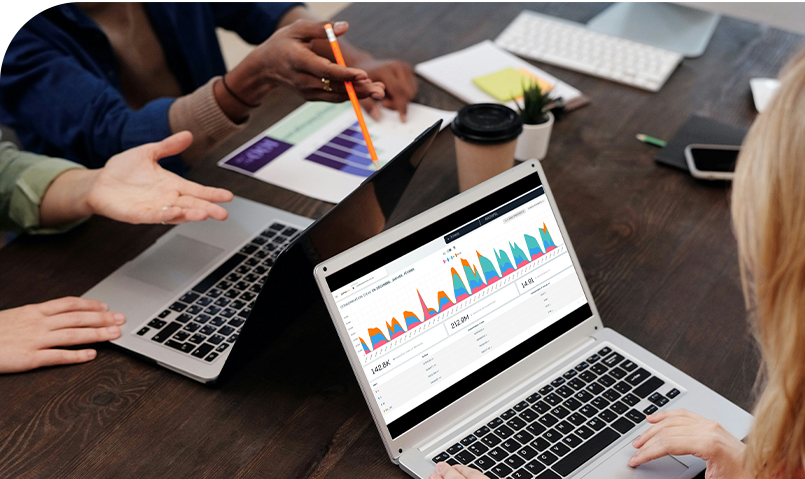
Our energy management software thus enables a centralized view and dynamic management of the energy consumption of your commercial or industrial buildings, with a unique ability to act: adjusting setpoints, activating load-shedding scenarios or smart modulation according to the actual or scheduled use of zones.
Want to go beyond simple reporting? It’s time for smart action with our solution.
The benefits of our energy management software


Key figures of our EMS software
-15 to -25 %
in average consumption observed thanks to smart management of technical systems
100 %
compatible with the tertiary sector decree and CSR commitments
4+
types of utilities tracked (electricity, water, gas, heat…)
✔
Native interoperability with BMS, sensors, meters and third-party APIs
✔
CO₂ dashboards considering the actual energy mix
✔
Integrated tracking of renewable energy generation (solar panels, wind turbines, etc.)
Move from measurement to action Discover how our energy management software can turn your data into levers for action.
Request your demoThey trust us





How to choose the right energy management software
- Choose a tool that adapts to your current and future needs and that centralizes all the data without complexity. This helps you get a clear view of your consumption and plan your actions.
- Check that the software offers clear, easy-to-understand reports to track consumption, detect discrepancies and compare performance over time. These reports must be readable even by non-technical people.
- Look at compatibility with your existing equipment to avoid additional costs related to integrating or upgrading your hardware.
- Favor an interface that is simple and quick for your teams to use, so they can take ownership of it quickly and remain autonomous without lengthy training.
- Check the ability to track several sites at the same time if you manage multiple buildings or production areas. This makes it easier to compare and prioritize actions.
- Make sure data updates are automatic and information is reliable, so you can base your decisions on accurate and recent figures.
Why an EMS is very important in an energy management strategy?
An EMS centralizes your consumption data in real time, making it possible to quickly identify waste and understand where efficiency losses occur. It serves as a basis for acting quickly and avoiding extra costs.
It helps you prioritize the most cost-effective actions and to plan concrete improvements in your energy management. Automatic alerts and continuous monitoring reduce manual data-entry errors and save significant time.
An EMS also makes it easier to prepare energy audits and comply with applicable standards by bringing all the information together in a single tool. This centralization makes it possible to prove your results and to more easily involve management or your partners in the process.
How to establish a good energy management strategy?
- Analyze current consumption to identify energy-intensive areas and understand how energy is used in each department or building.
- Set measurable and achievable objectives, for example reducing consumption by 10% over a given period or improving the efficiency of a specific piece of equipment.
- Involve all teams from the outset to create an energy-saving culture and ensure that everyone adopts good practices on a daily basis.
- Choose indicators that are simple to track and define a clear monitoring frequency, such as monthly or quarterly reports, to measure progress and adjust your actions.
- Regularly reassess the results and adjust the strategy according to developments, new equipment or improvement opportunities that arise over time.